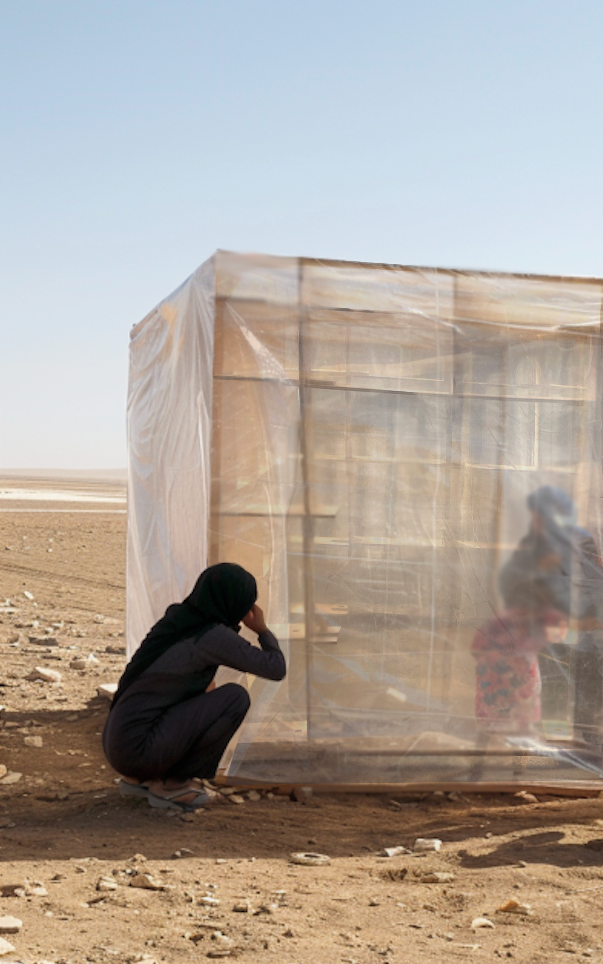
Chaos in human society is inevitable when order breaks down. Current conflict-ridden regions globally speak to this chaos. Unstable social, political, or environmental conditions force citizens to flee their nation and seek land refuge with a moment’s notice. Refugee displacement has increased dramatically after plateauing for quite awhile. Turbulent unrest in various home countries is growing.
THE MASTERS RESEARCH PROJECT
ADDRESSING DISPLACEMENT THROUGH A FRICTION FIT TEMPORARY AND PORTABLE SHELTER
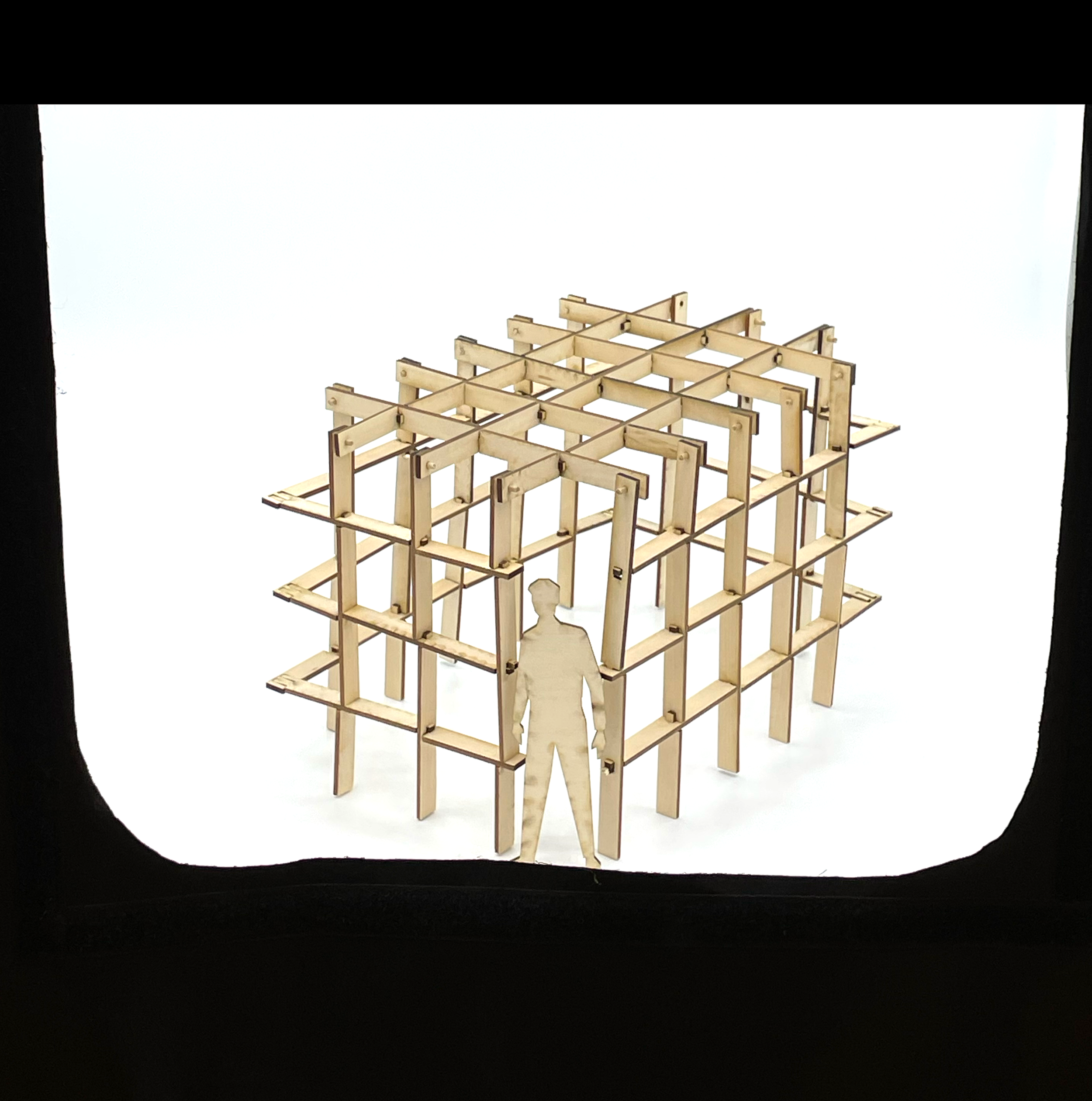
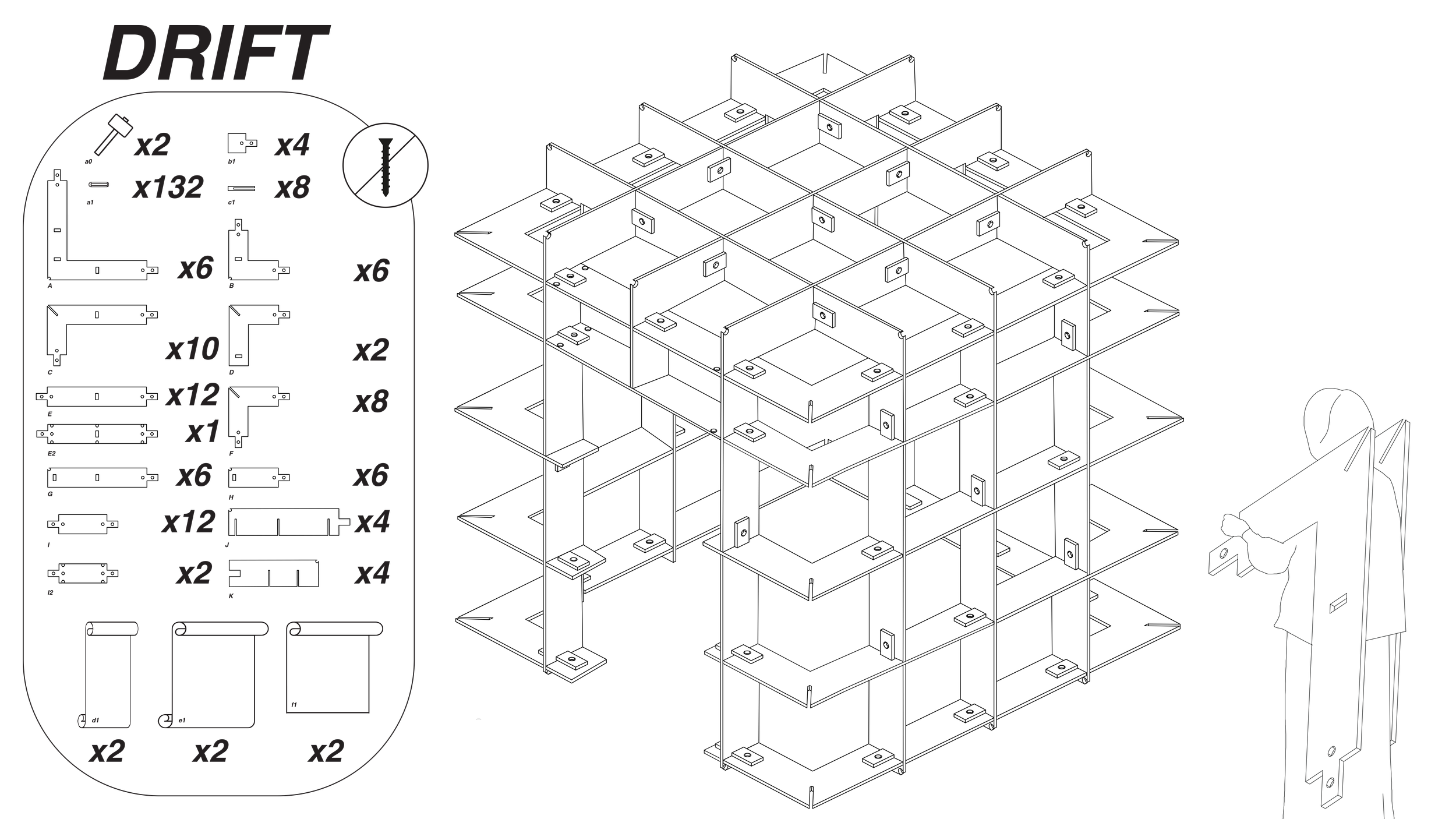
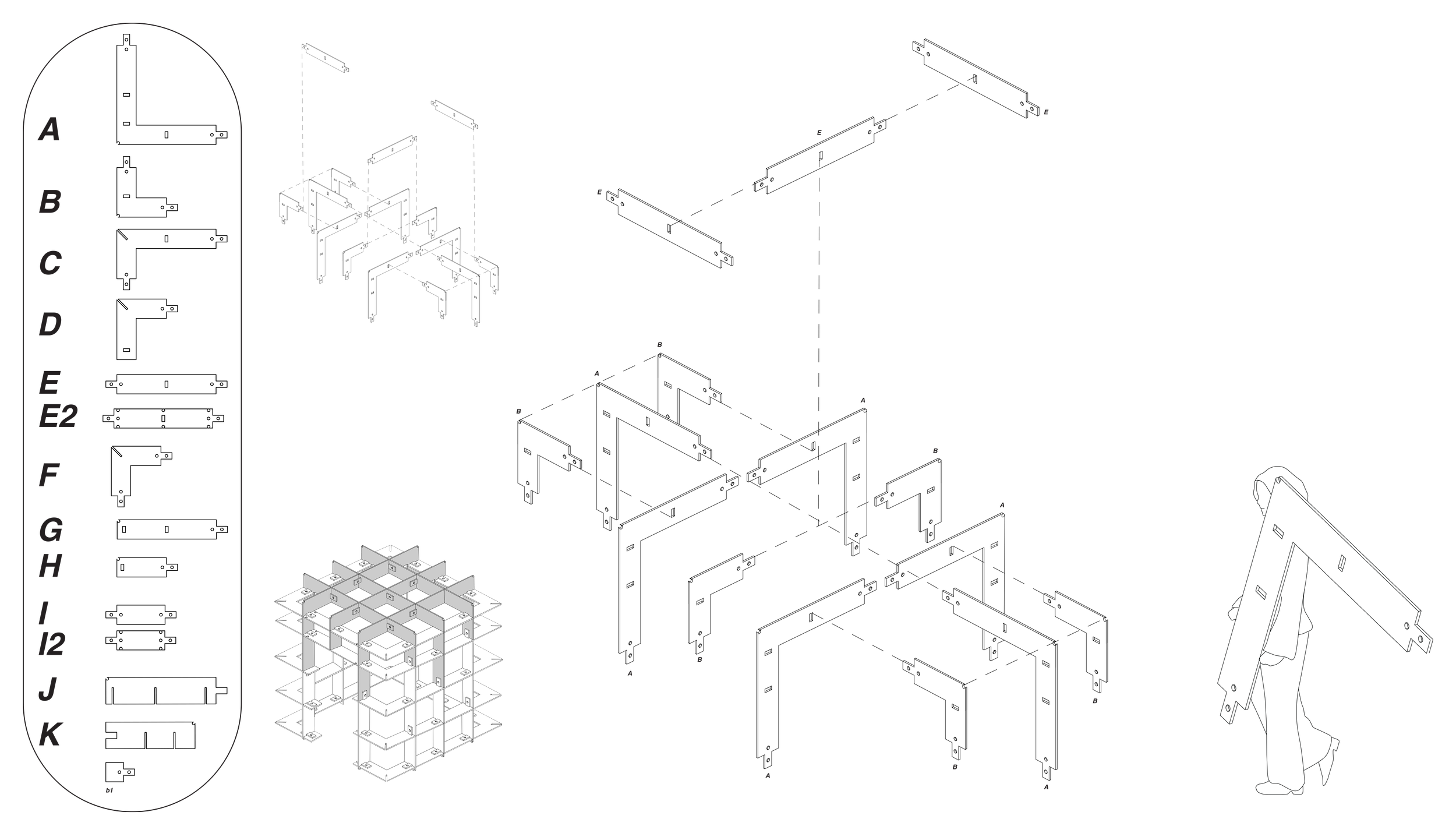
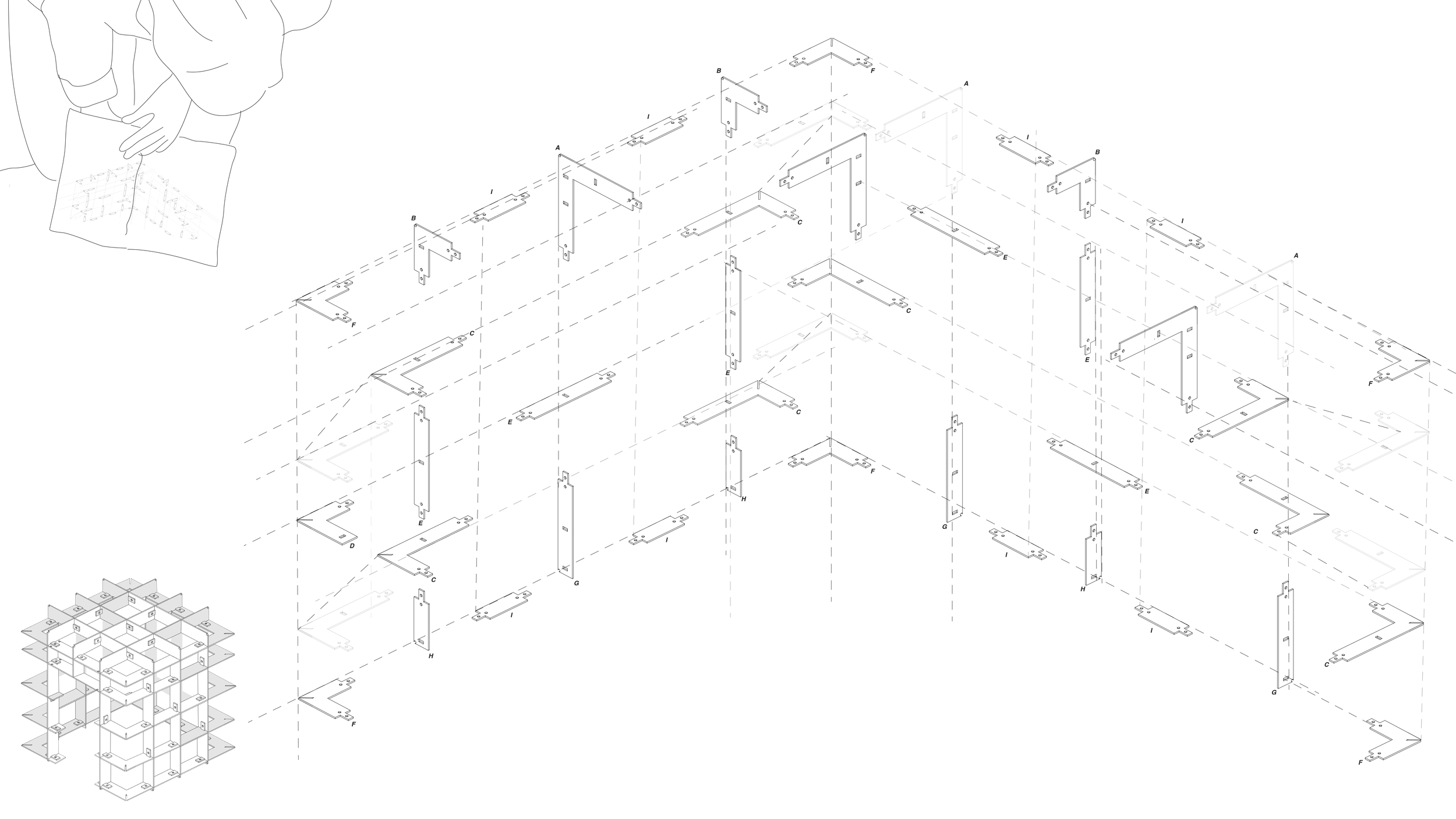
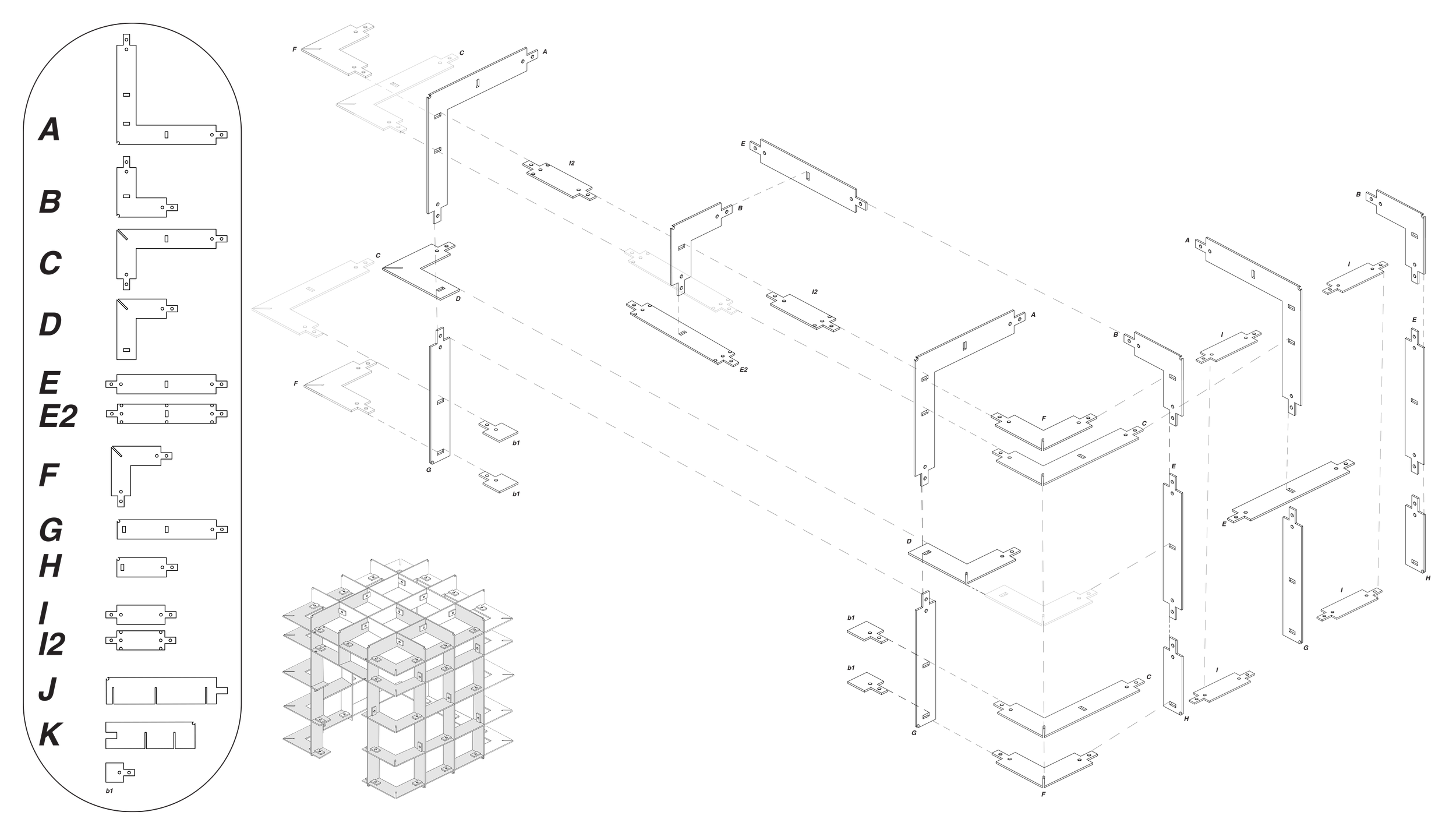
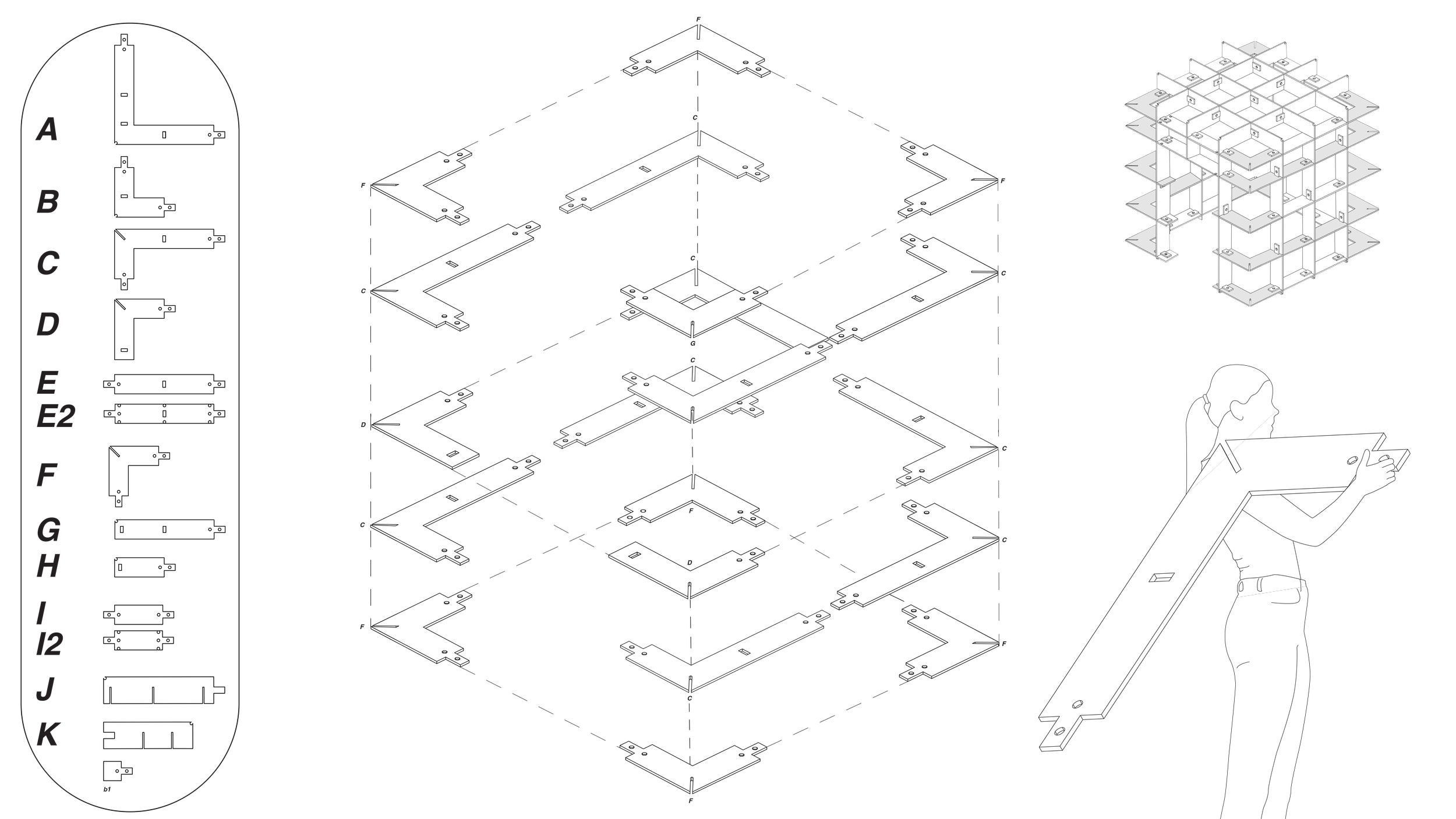
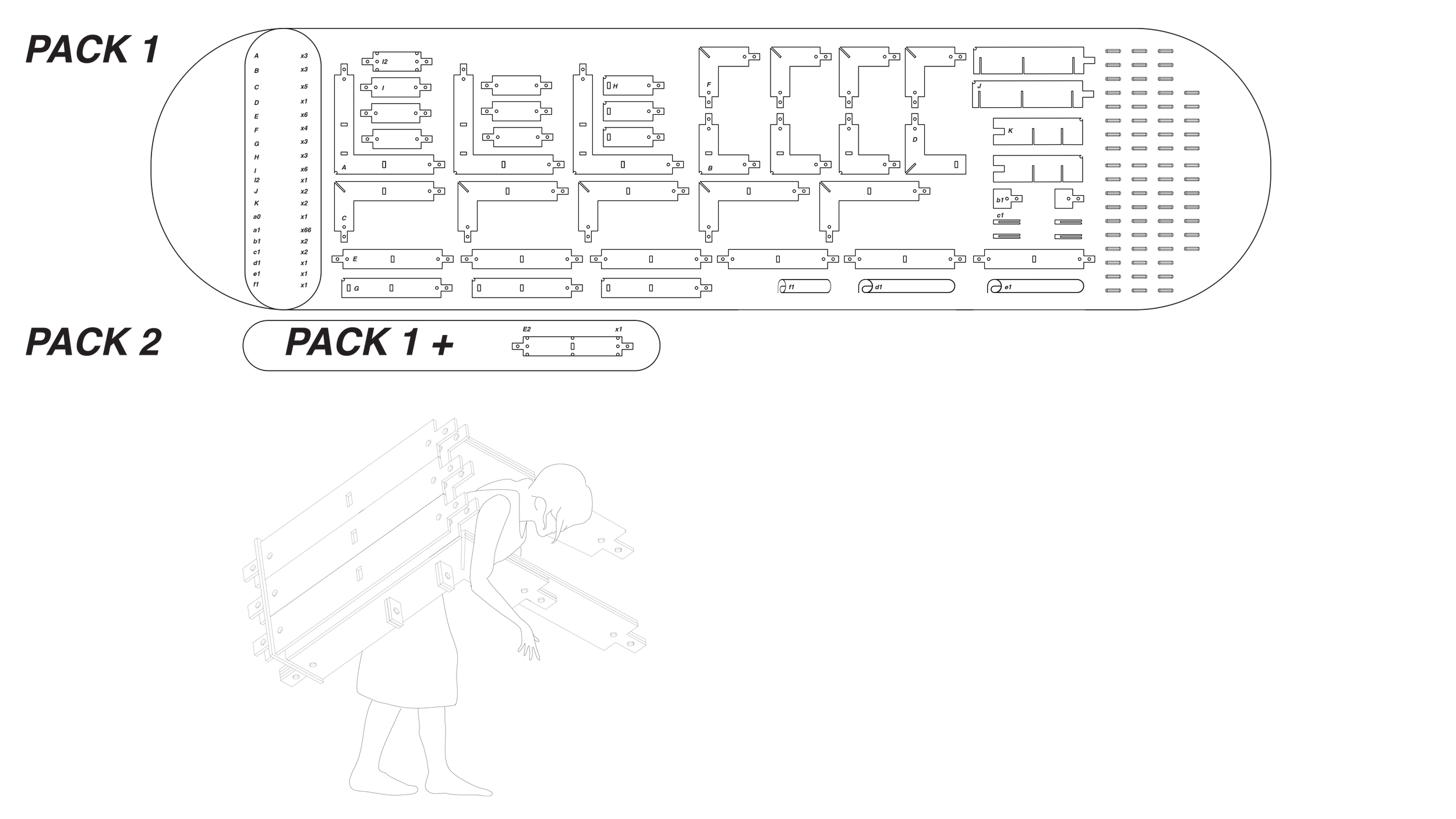
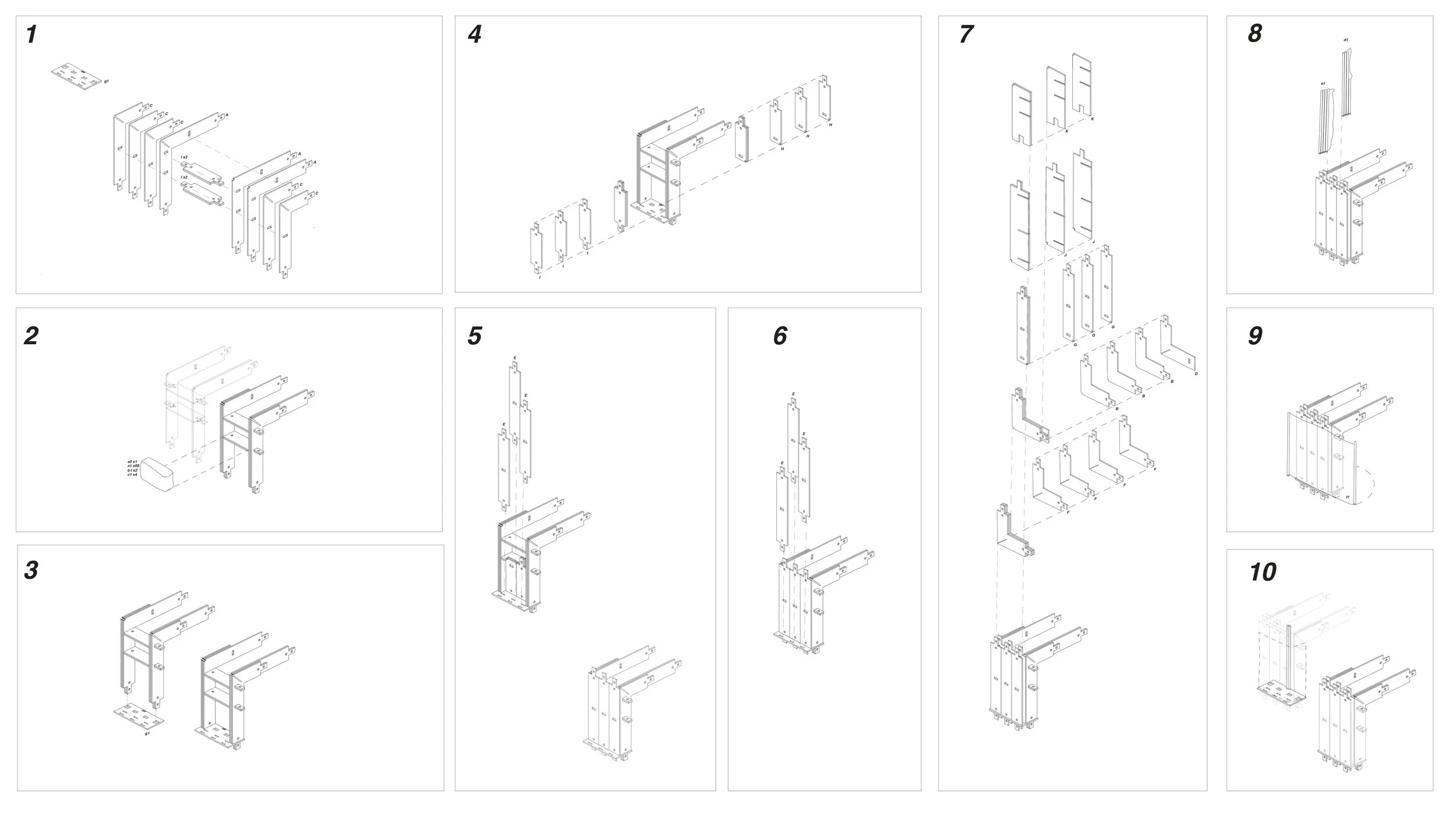
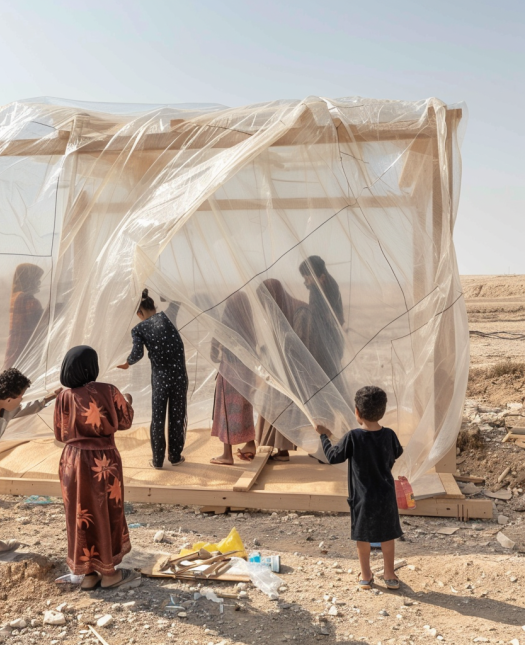
Shelter is the primary need of a refugee. Traditional refugee camp shelters often face challenges of high density due to uncontrollable sprawl, congestion, and poor spatial design. This in-turn leads to lack of security. Although shelters are required to be temporary and are built with limited resources, shelter quality must meet reasonable standards and fulfill basic humanitarian requirements. With that, the forthcoming research is to design a kit of parts, using the same four foot long member, to construct a temporary home that requires no tools or screws for assembly. The home can easily be stored in the trunk of a vehicle or carried on the back of a family. Refugees carry from their homes what is manageable, along with their kit of parts. In this reciprocal framed space, refugees will find solitude and hope from their chaotic world left behind.
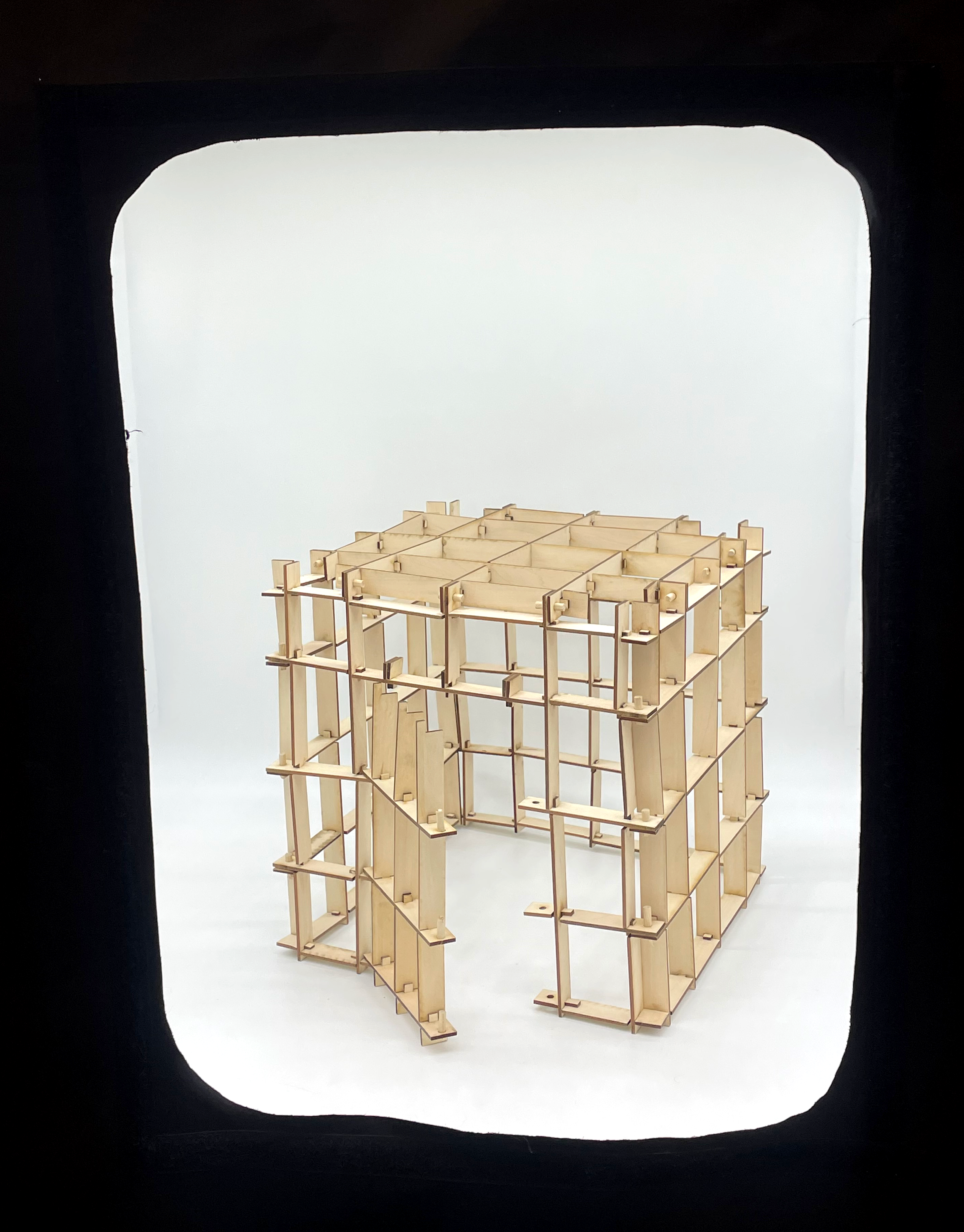
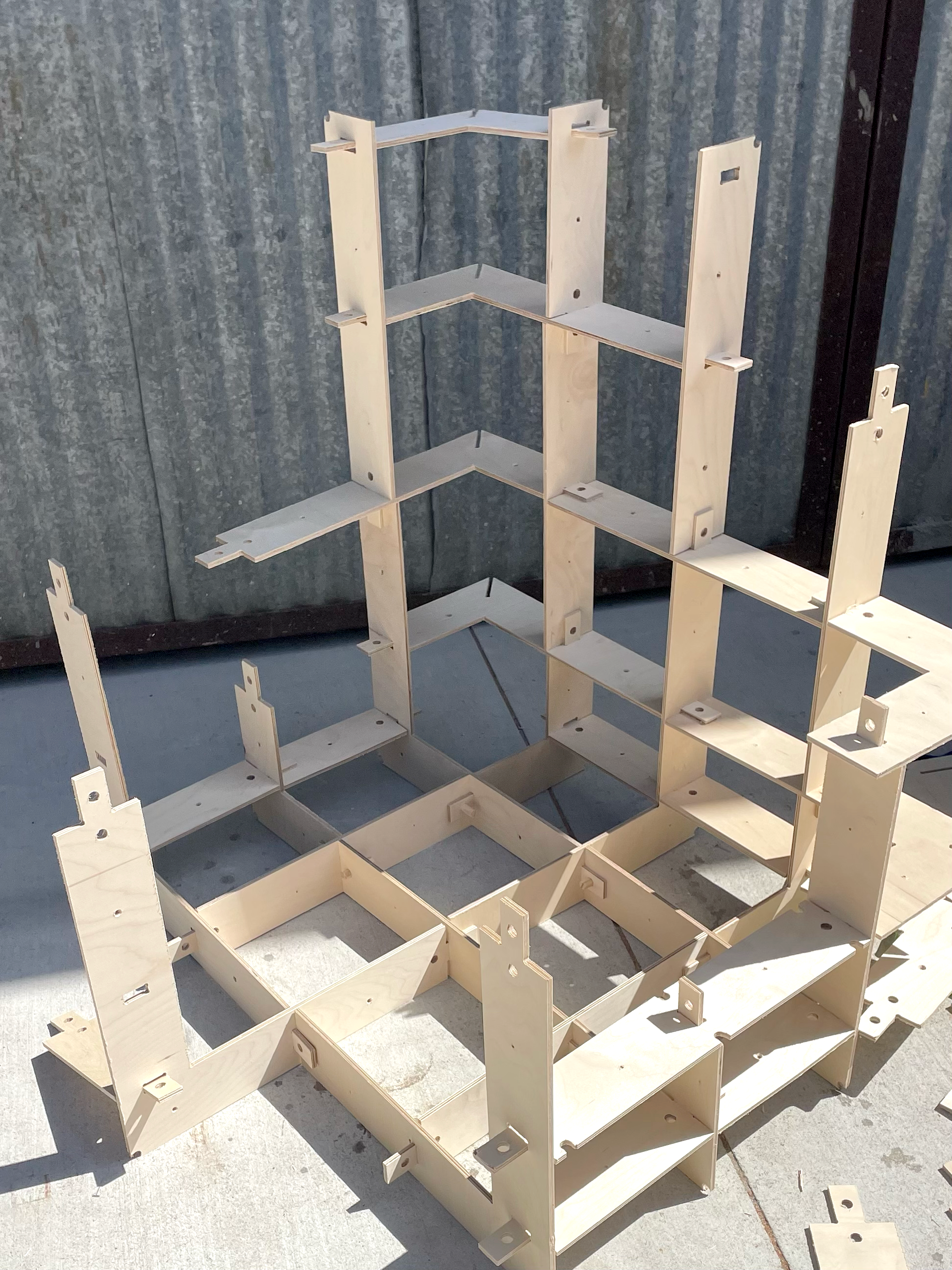
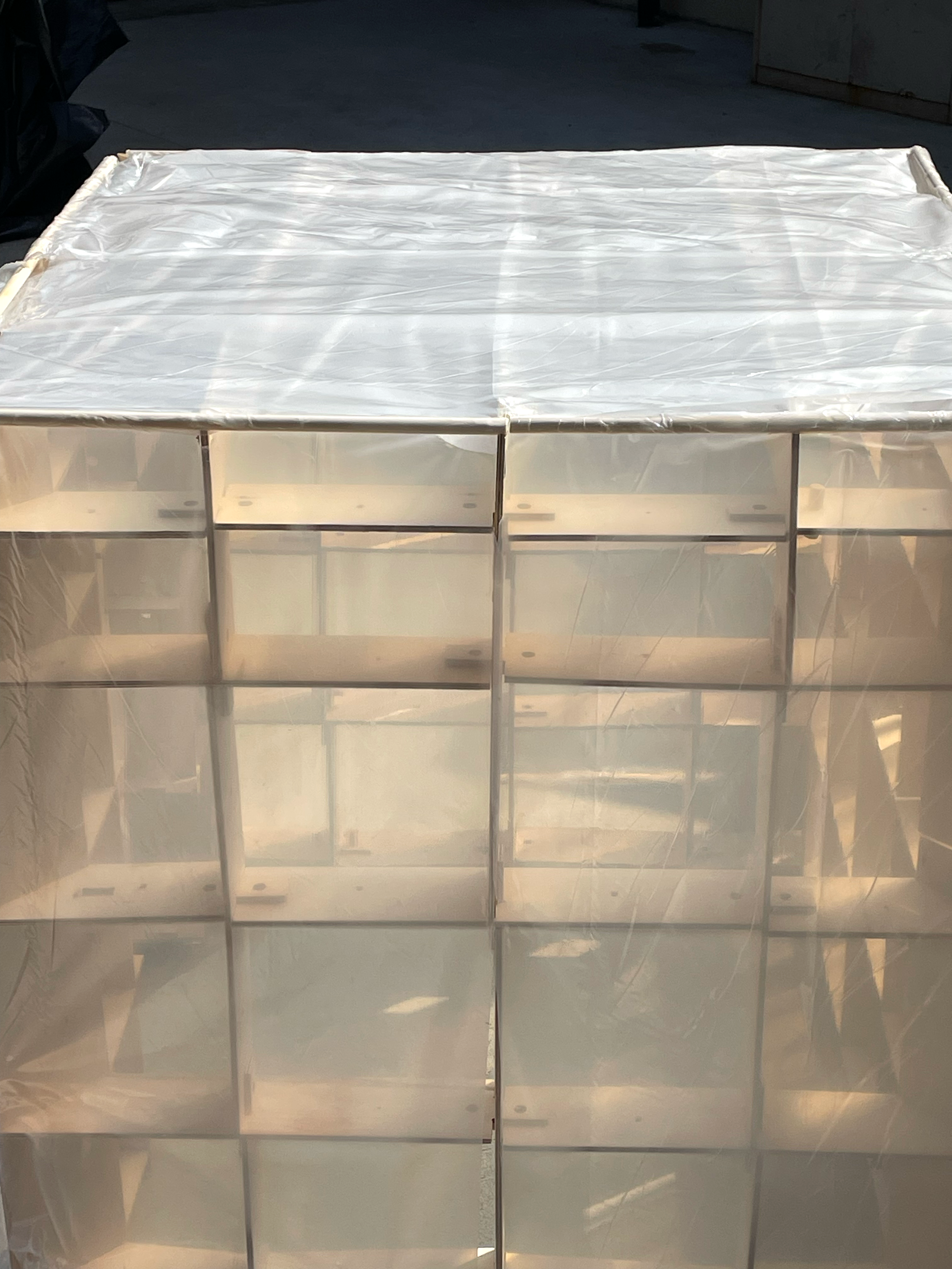
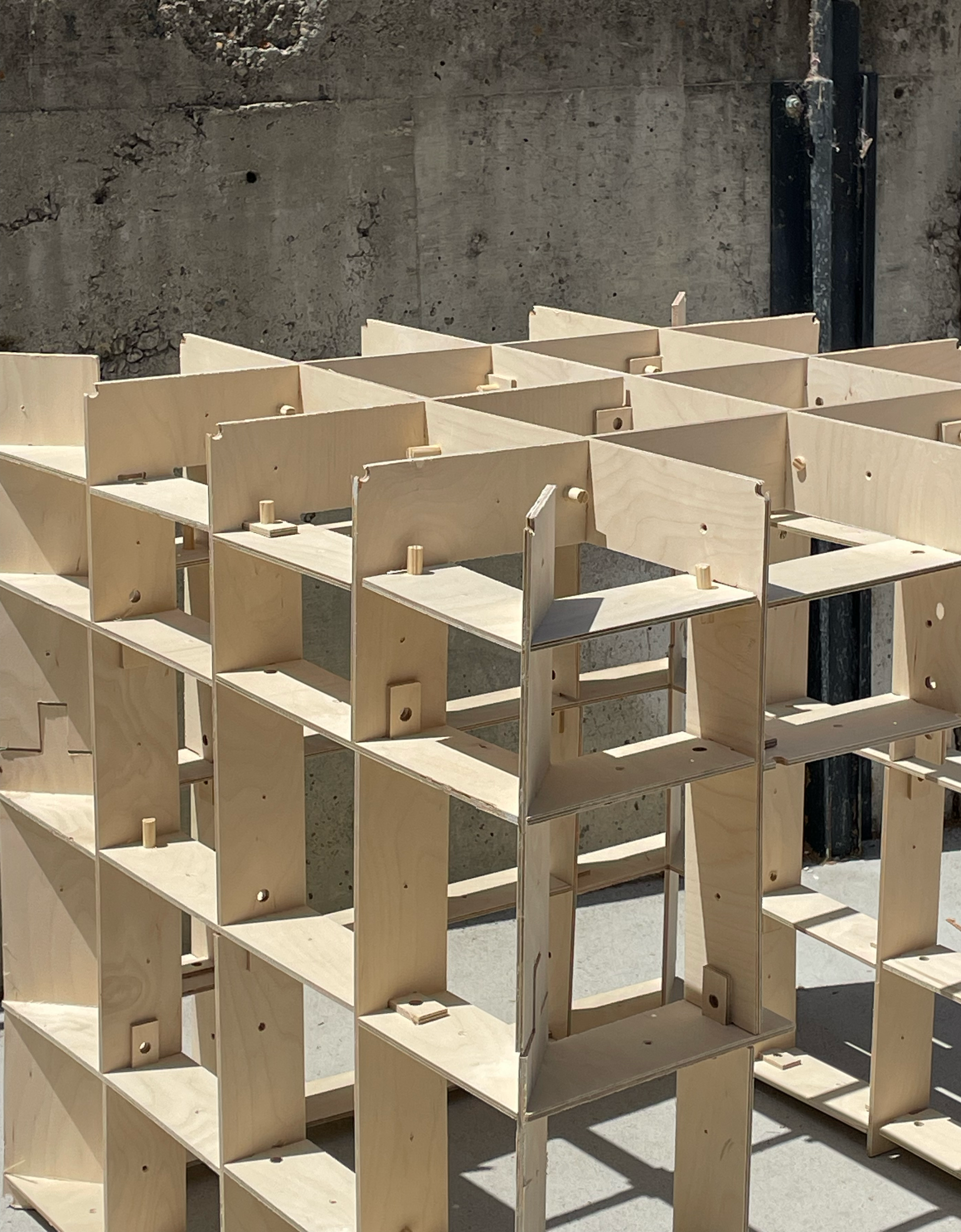
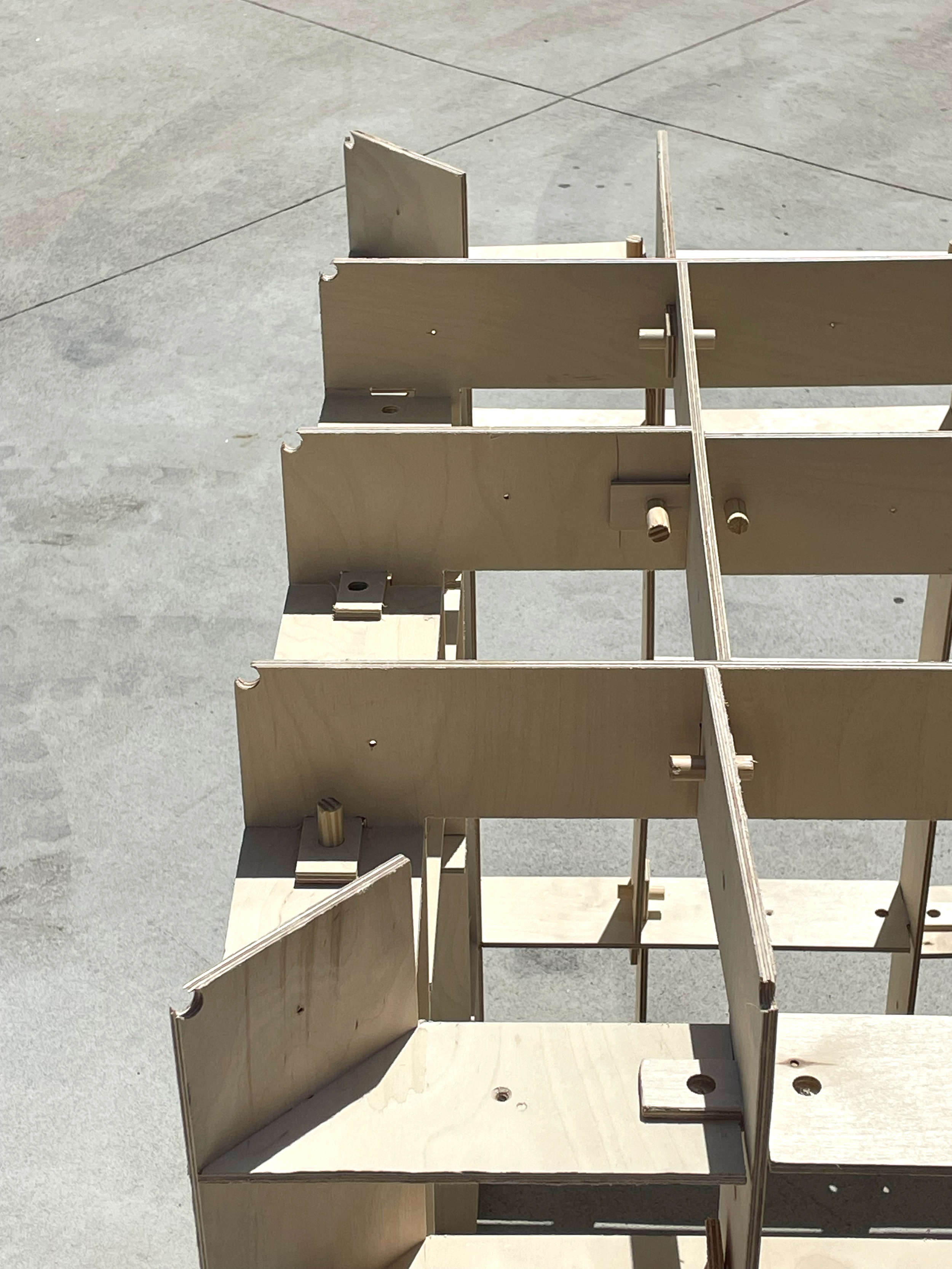
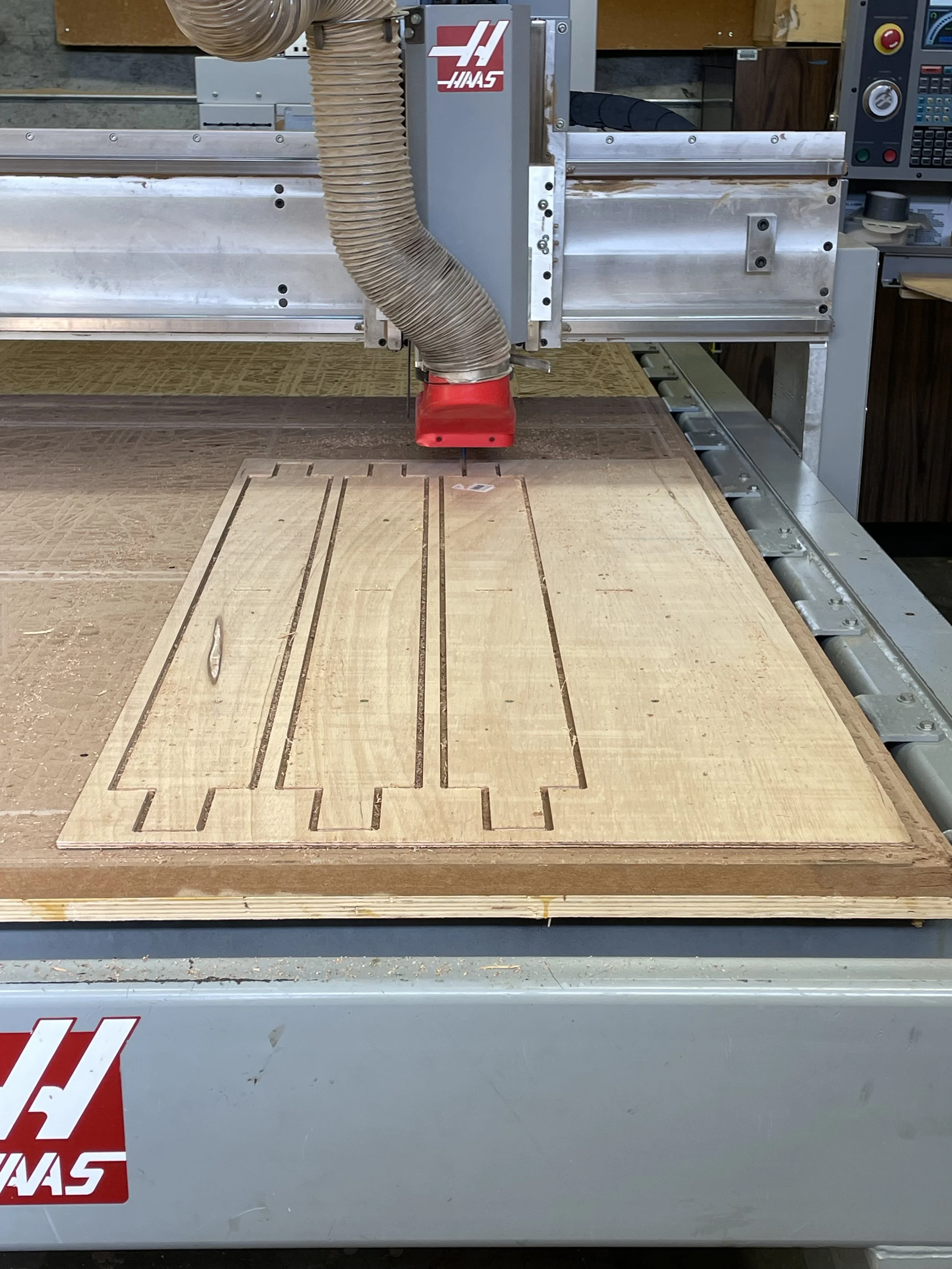
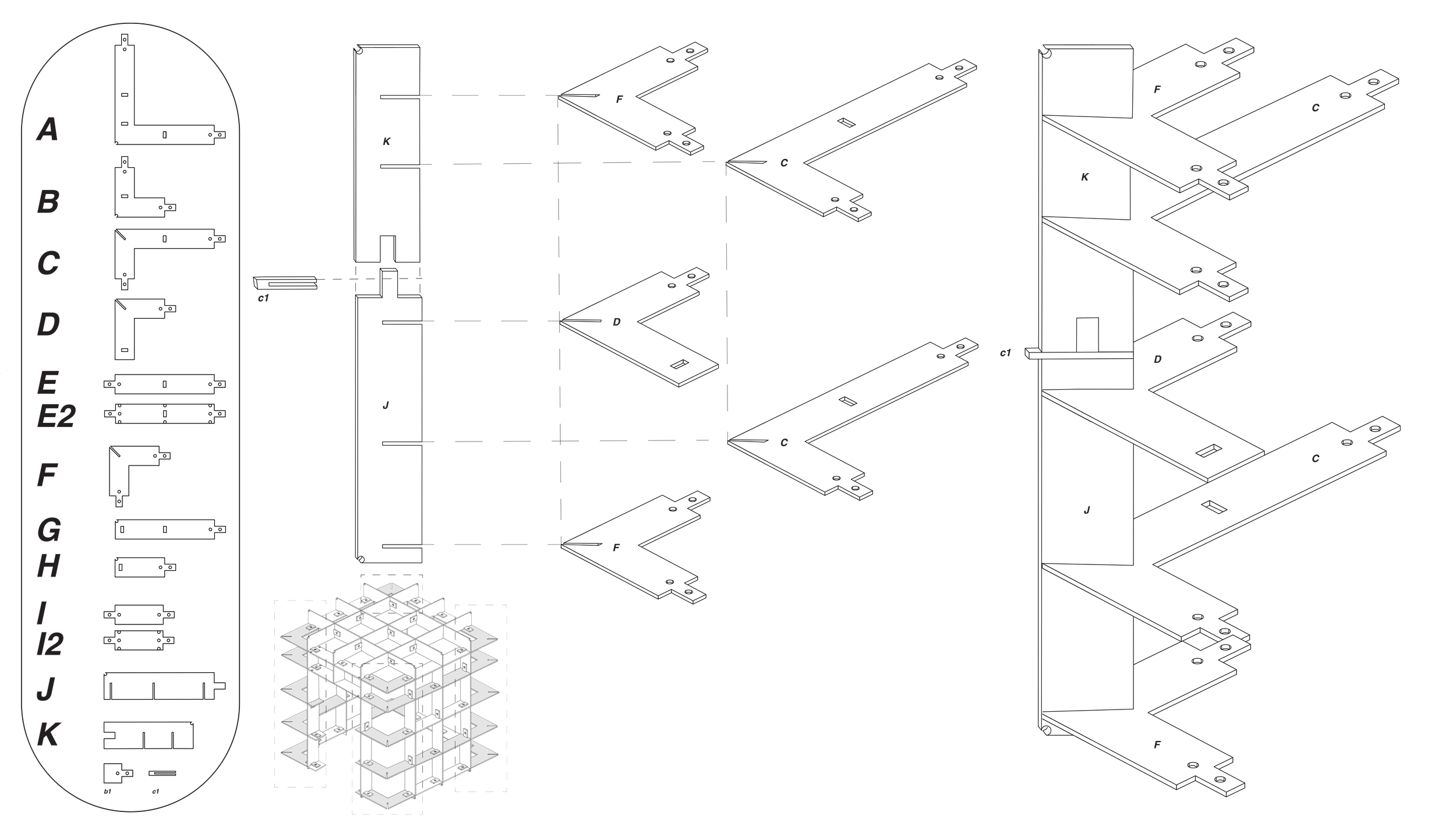
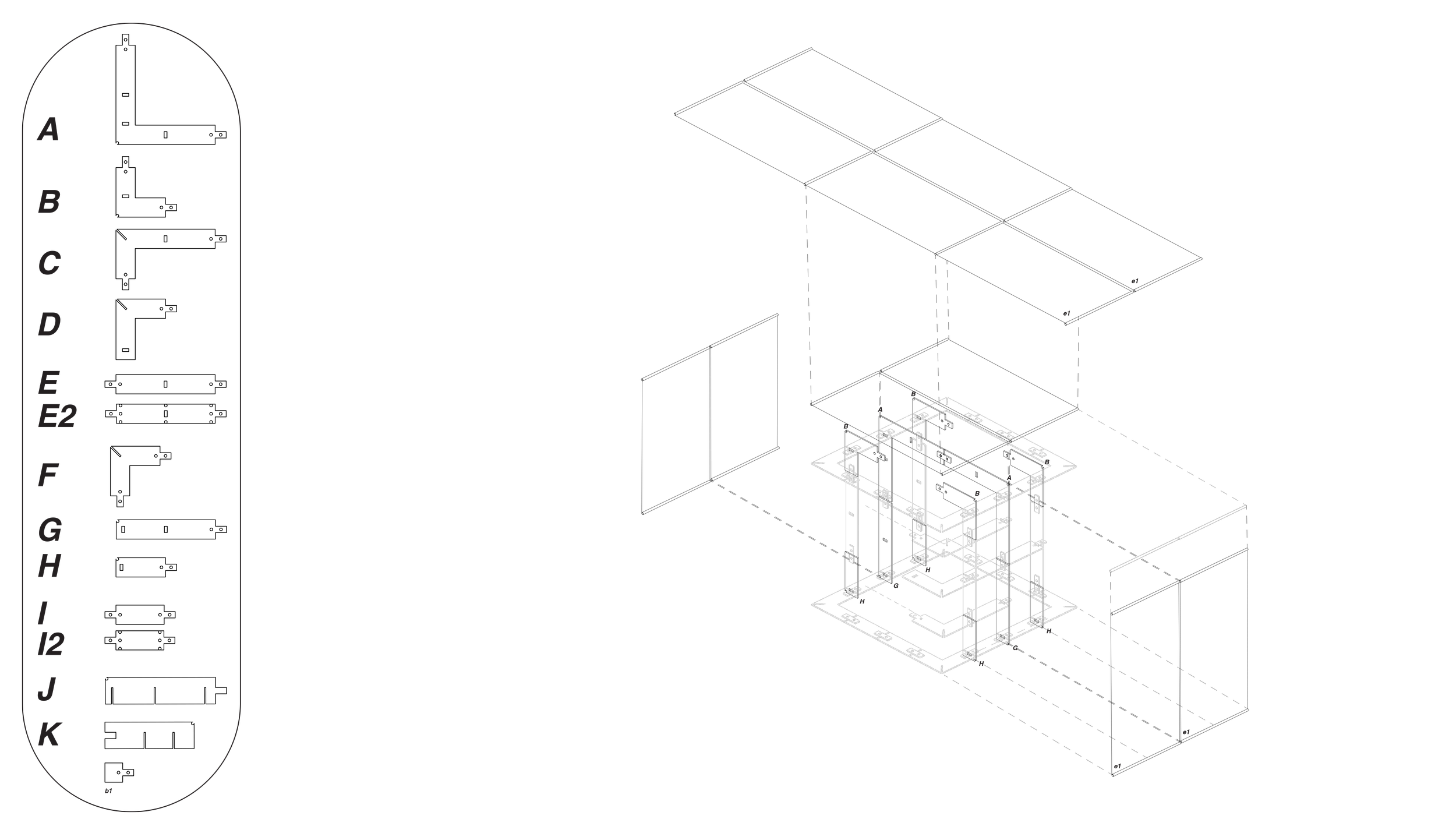
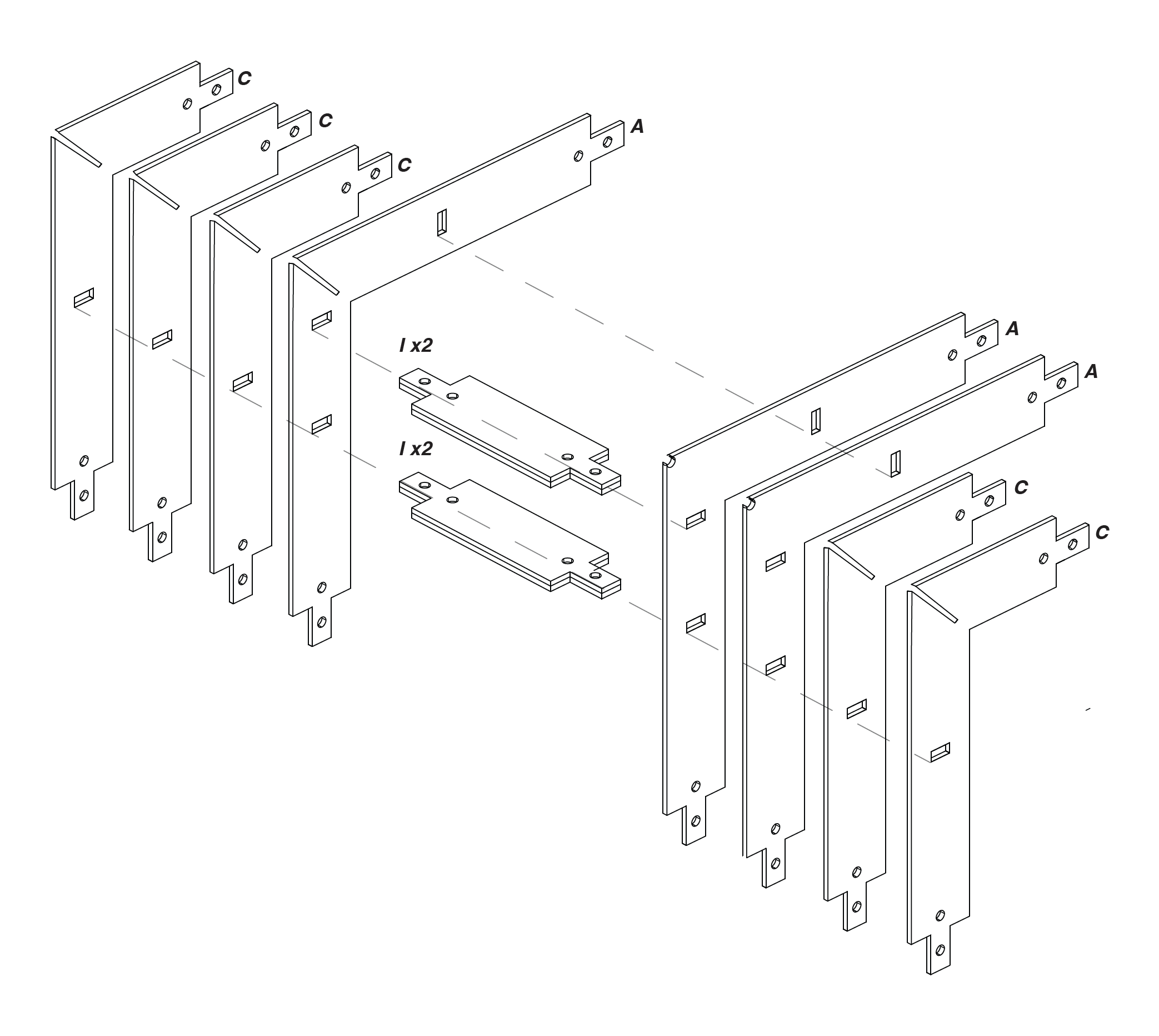
The module was developed based on a 6-member base grid of the structure inspired by the 2005 Serpentine Pavilion. The structural system designed is a grid of friction-fit connections relying mainly on mortise-and-tenon connections, with a secondary method of stability with overlapping members taking dowel connections. To further the theme of portability, the structural system is a mortise-and-tenon approach. This better allows for use of light weight material through the use of flat ¼ in. thick plywood members. In turn this provides a more efficient disassembly, reassembly, and reuse.
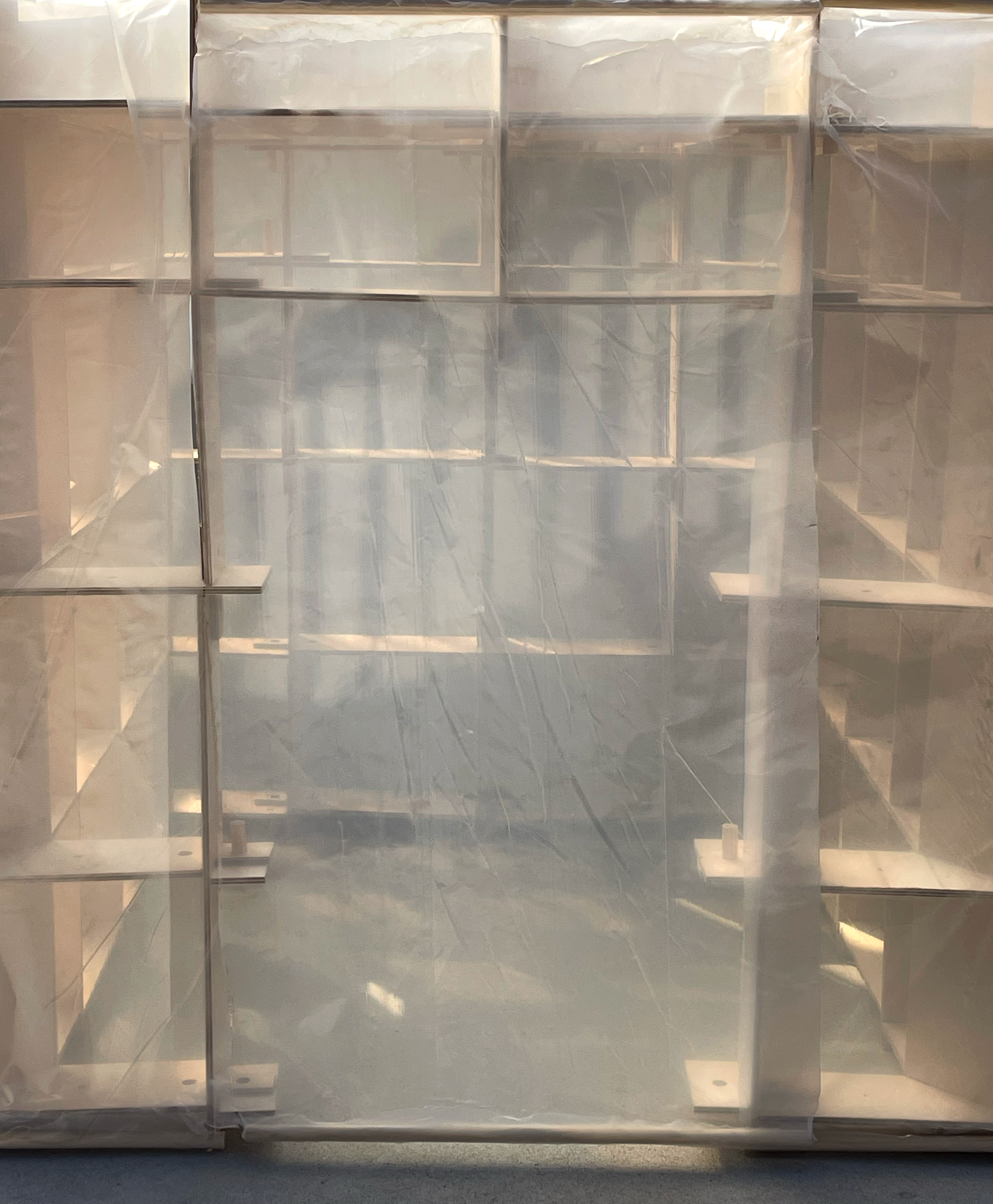
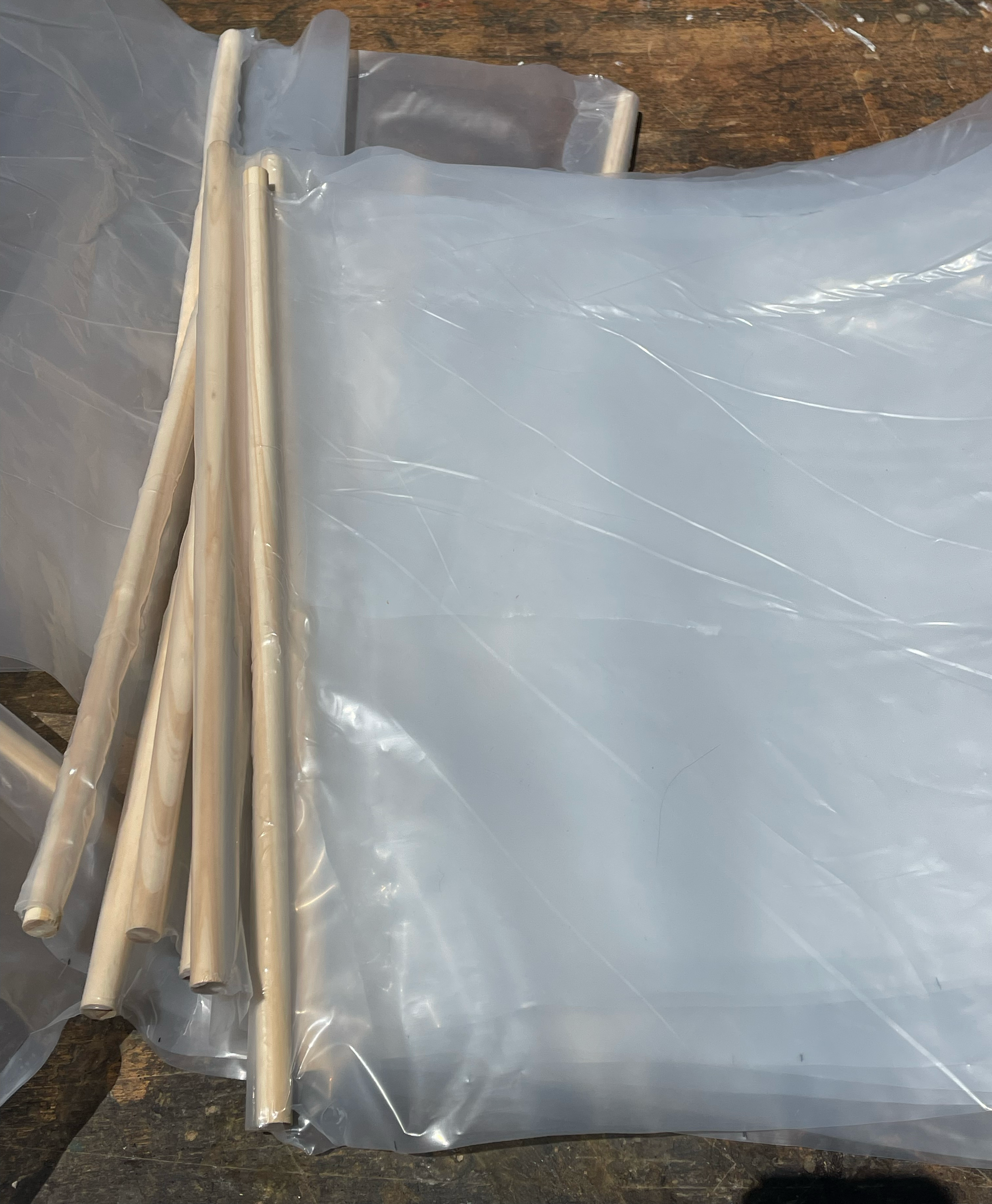
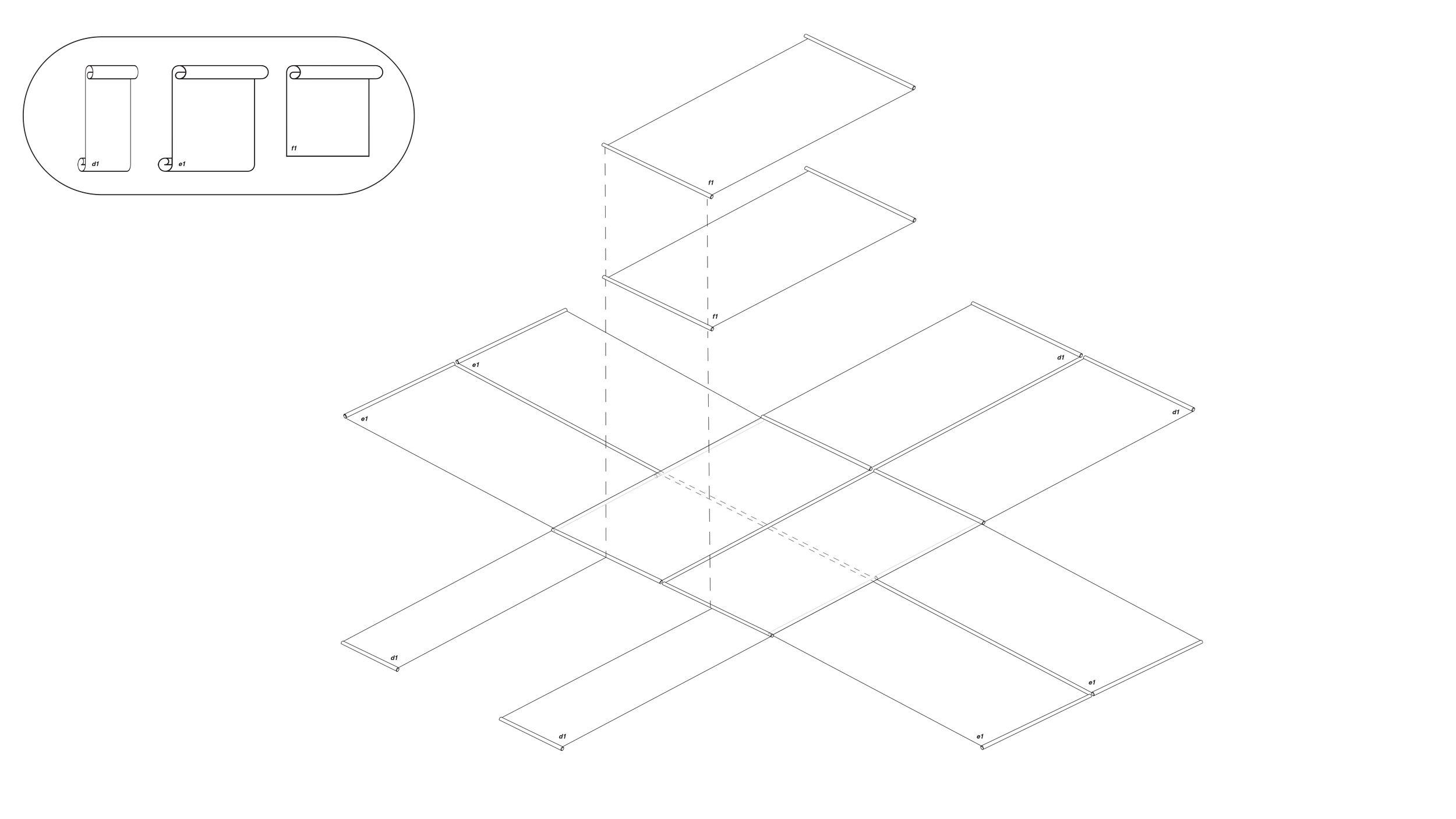
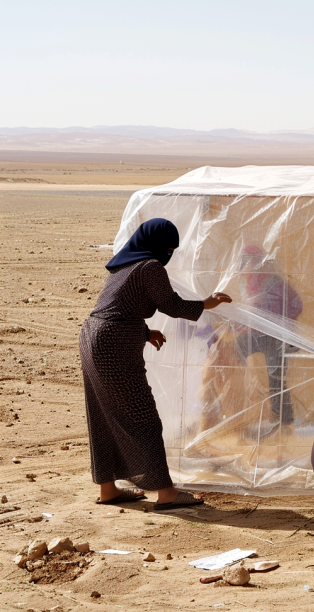
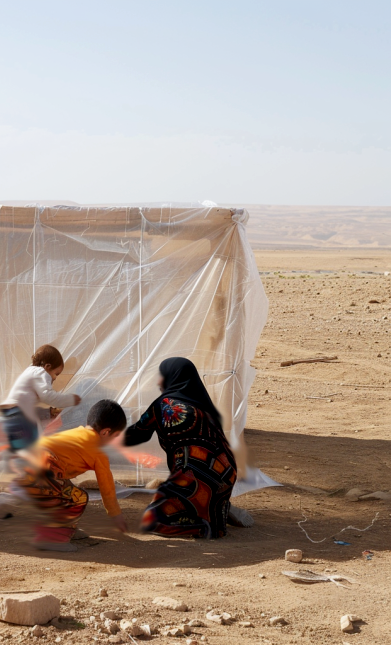
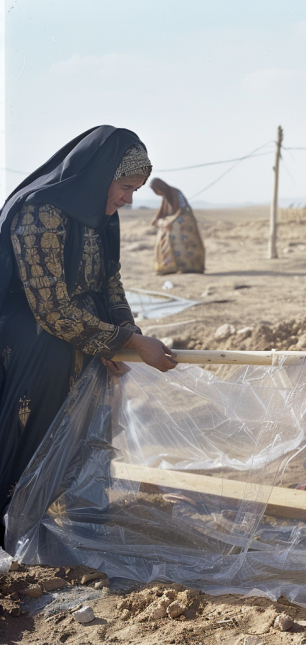
Cladding is taut, clipping into the structure itself at five points on each edge of each face. Six scrolls are included in the kit. Two cladding scrolls run in one direction, while the other two run in the perpendicular direction. Two scrolls are designated for the door.
The ease of the friction fit method and how everything melded together was intriguing from the start and has remained so until the end. Despite simplicity, there is an abundance of meaning embedded within the walls of the Drift structure. A wholeness exists in the structure, that feels timeless yet modern, and reads well across varying perspectives. Drift is easily understood in how it flows with the cladding, the structure, and the space. Nothing is forced nor hidden. Allowing the structure to express itself, rather than attempting to do something extravagant solely for the sake of show, led to profound insights in design methods.
DRIFT emergency shelter design for
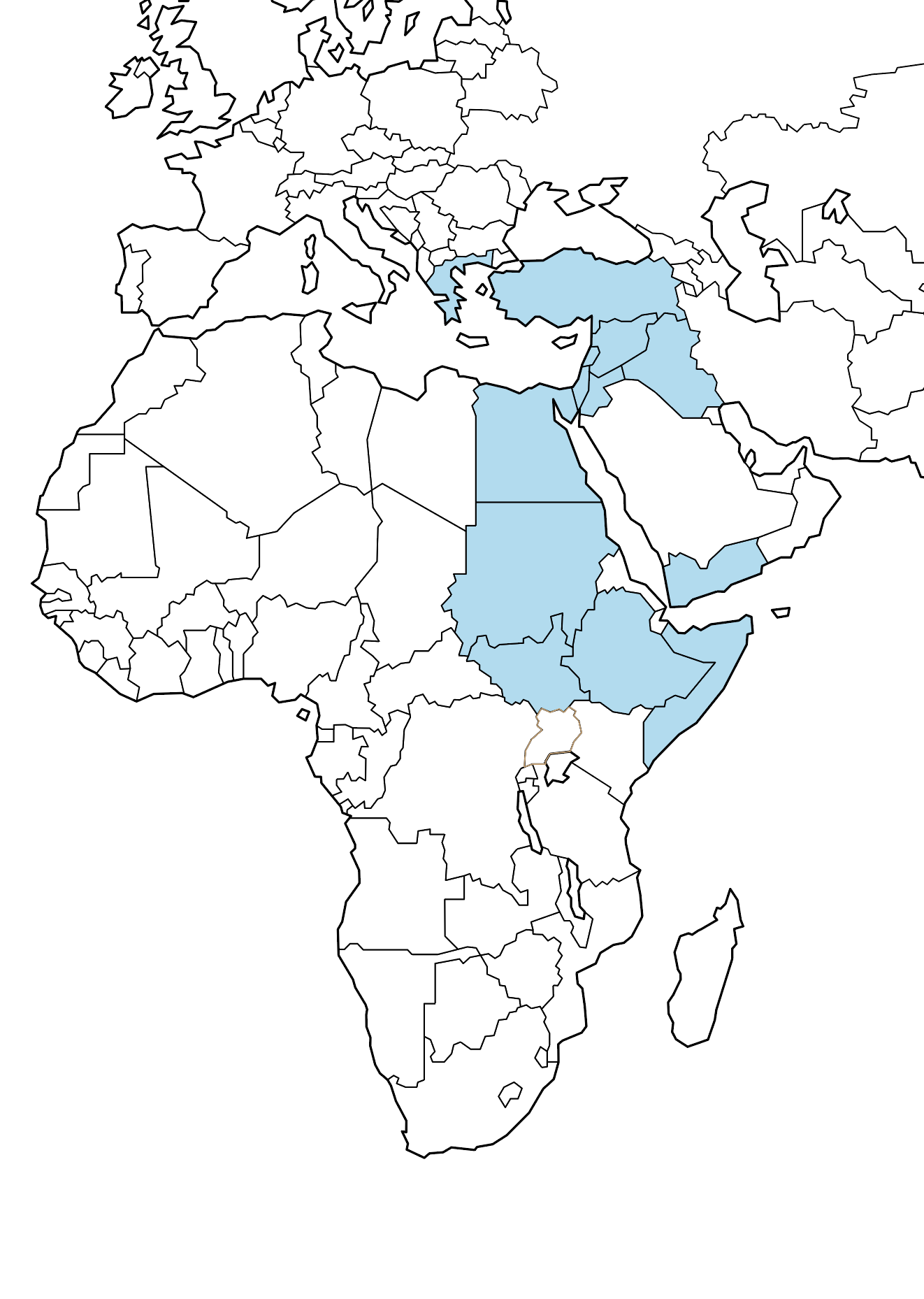
NORTHERN/EASTERN AFRICA + THE MIDDLE EAST